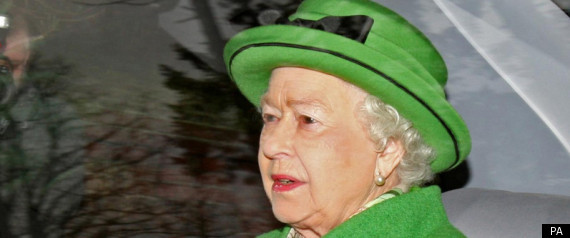
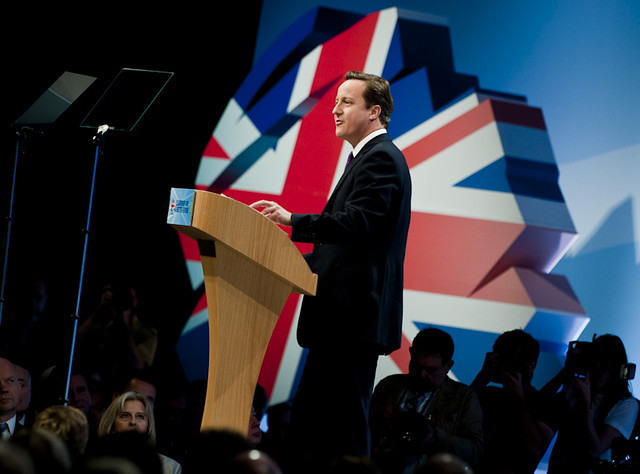
My tribute to a great Prime Minister.
Wednesday, April 10, 2013
Friday, September 21, 2012
Uninspiring party politics isn't the only reason party membership is in freefall
In his article for Friday's Telegraph, Fraser Nelson repeats a previously-made claim that Britain is interested in being members of political causes, just not the main parties, using the following examples:
If I join the National Trust, I get "free access and parking at over 300 historic house, gardens and countryside and coastline spaces", a members' handbook, a thrice-yearly magazine and an unspecified free gift.
If I join the Royal Society for the Protection of Birds, I get free entry to over 100 nature reserves, a quarterly magazine, a member's pack and a choice of free gifts.
If I join the Conservative Party, I get invitations to dull fundraisers that I have to pay to get into, regular requests for leaflet delivery, and every now and again a letter begging for donations. (And on the two occasions when I joined, I wasn't even issued a membership card - despite repeated, and acknowledged, requests for one to CCHQ.)
These are all at comparable annual prices (in fact the RSPB lets you join on a monthly basis), so if you're on a limited household budget, careful about what you spend your money on, would you go for one of the choices that saves you money on a pleasant family day out every now and again, or the membership that gives you a bit more to toil over when you get home from a hard day's work?
Nelson then goes on to list rising support for the Taxpayers' Alliance, Big Brother Watch and 38 Degrees. Well you know what, membership of all of those organisations is free. And I'll bet many of the people who signed up have already forgotten they'd done so, with their emails either unsubscribed or relegated to the spam folder long ago. (I've certainly registered my support for a few organisations like that.)
The political parties' model of membership is totally outdated for the modern age, and if they don't want to carry on in decline, they're going to have to choose between a model where members get something back for what they put in, or a more diffuse model where members can get involved without having to pay anything at all. That alone isn't going to inspire people, but it's an important step towards reviving participation in British party politics.
Update:
Britain is an intensely political country, and there is no shortage of support (or donations) for the right causes. Over the past two decades, while the Tory party’s membership has fallen by four fifths, the National Trust has seen its membership double. The Royal Society for the Protection of Birds has more paying members than all political parties put together.While he's right that Britain is supporting these causes, it is not entirely clear that it is doing so for the altruistic reasons Nelson suggests. The membership packages he compares offer distinctly different things.
If I join the National Trust, I get "free access and parking at over 300 historic house, gardens and countryside and coastline spaces", a members' handbook, a thrice-yearly magazine and an unspecified free gift.
If I join the Royal Society for the Protection of Birds, I get free entry to over 100 nature reserves, a quarterly magazine, a member's pack and a choice of free gifts.
If I join the Conservative Party, I get invitations to dull fundraisers that I have to pay to get into, regular requests for leaflet delivery, and every now and again a letter begging for donations. (And on the two occasions when I joined, I wasn't even issued a membership card - despite repeated, and acknowledged, requests for one to CCHQ.)
These are all at comparable annual prices (in fact the RSPB lets you join on a monthly basis), so if you're on a limited household budget, careful about what you spend your money on, would you go for one of the choices that saves you money on a pleasant family day out every now and again, or the membership that gives you a bit more to toil over when you get home from a hard day's work?
Nelson then goes on to list rising support for the Taxpayers' Alliance, Big Brother Watch and 38 Degrees. Well you know what, membership of all of those organisations is free. And I'll bet many of the people who signed up have already forgotten they'd done so, with their emails either unsubscribed or relegated to the spam folder long ago. (I've certainly registered my support for a few organisations like that.)
The political parties' model of membership is totally outdated for the modern age, and if they don't want to carry on in decline, they're going to have to choose between a model where members get something back for what they put in, or a more diffuse model where members can get involved without having to pay anything at all. That alone isn't going to inspire people, but it's an important step towards reviving participation in British party politics.
Update:
@tomdaylight fair point, I didn't mean to say they are directly comparable. Just that voluntary organisations are not all in decline.
— Fraser Nelson (@frasernelson) September 21, 2012
Friday, June 1, 2012
The Whimpering Voice
![]() |
| Danny O'Donoghue in his Victorian busker years |
I used to watch X Factor, from the very beginning, and by the second series it had developed into a trashy, yet compulsively addictive show that I couldn't allow myself to miss - and as each series went on it got trashier and yet the compulsion to watch grew perversely stronger. The music itself was pushed to one side as it became a platform for:
- Simon Cowell's smug proclamations about music - a subject he knows a great deal about, having brought us records from such luminary artists as Zig and Zag, Robson and Jerome and the Teletubbies - though to his credit he was always rather more plugged in about the quality of the singer in front of him than the airheads sitting next to him, in the earlier series anyway (his standards seemed to slip as the years went by and his pockets got fuller)
- Various obvious deceptions, eg that 150,000 people had auditioned in front of the single panel of diva-like judges
- The inane witterings of Louis Walsh, a man who would otherwise be unemployed by now if not for TV fame (I can't imagine how much contestants resent being in "his" category)
- Unthinking ageism (once you're over 25 you're "past it"?)
- Talentless novelty acts like Chico, Wagner and Jedward (in fairness, I like Jedward now, but they were awful on X Factor, and they still can't sing)
- Cheryl Cole (not her music but her, er, "personality"?)
- Artificial drama, usually carefully co-ordinated with the tabloids
- An even-numbered judging panel that more often than not deferred to the public vote, thereby rendering the sing-offs a complete waste of time
- Pretending that nobody on the show is gay (thankfully this has improved in the last two years)
- Promoting shallow qualities like physical appearance and manner over talent and singing ability
- Premium rate phone voting (so the results would be determined by people with more money than sense, usually voting more than once)
- The exploitation and abuse of mentally ill people.
Of course a string of winners I thought were unworthy of the infamously constrictive and unrewarding record contract (Leon? Seriously?) - and my favourite acts being knocked out in early stages of the public voting - had also frustrated me, but I'd never liked the Crap Auditions, I thought putting them in front of a live audience only heightened the cruelty, and it was for this reason that I stopped watching X Factor and had no plans whatsoever to give the Voice a look-in.
But it only took a few minutes I caught of the first episode of The Voice to hook me in completely.
It was very different to what I expected. This was no X Factor knock-off - the audition format was truly innovative, the spinning chair element nowhere near as silly as it seemed on paper. There were no bad singers, and a strict limit on the number of auditionees a mentor was allowed to pick - and, while a Syco producer might have thought having only good quality singers would put a strain on the 'fun factor', this actually made the show exciting. People were being judged purely on the quality of their voice, or at least the style of their music, and living and dying by it. For the most part, only the cream of the crop were getting through - and decent singers (including some very good looking ones) would fail to progress simply because they didn't meet the high standard. And the judges - all internationally famous singers themselves - had real, constructive comments about the singers' performances, why they did or didn't get picked, and how they could develop their voice in the future.
The audition format was enormously compelling, but there was a nagging doubt at the back of my head. How will the show sustain itself into the later stages? The central conceit of "the judges don't know what the singers look like" was gone, but it's proven rather innovative so far, maybe they have some more twists up their sleeve?
Sure enough, the next stage was the "Battle Round". It was actually rather merciless, using a set dressed up like a boxing arena to pit contestants against one another so as to eventually whittle their number down by half. It did seem unfair at times, almost arbitrary, to put two singers against each other and judge them entirely by one performance of a duet they sing together - and there were a number of cases where some of the better singers lost out because they were pitted against the best singers - but because the standard overall was so high, the performances were actually wildly entertaining to listen to.
So the first two rounds were excellent TV - although to my mind it suffered from a few scheduling issues. The audition shows were an hour and twenty minutes each - about twenty minutes too long for a show without ad breaks - given there were only four of them you'd think they could have spread the auditions over six weeks instead. And then the Battle Round episodes were even longer, at one hour forty each - and broadcast in two installments over a single weekend! It got a little tough to endure the whole thing by the time it got to the twentieth duet.
While that may seem like a minor quibble, spreading those shows over a longer period of time would have protected the show from the disaster that followed. For the live shows seemingly offered very little in the way of difference from X Factor. I say seemingly because there were a few token differences, but every single one of them was worse.
Firstly, there were too many contestants. Something that couldn't be better highlighted than the fact that they had to split the line-up over two weeks at a time for the first four weeks. There are twenty contestants, and it's rather difficult for the audience to develop a connection with any one of them when they get seen very briefly once every fortnight for a month. And the short schedule of just six weeks meant that in three of the six live shows, including the semi final, 50% of the contestants - four out of eight each time - were sent home! (In fact it was ridiculously poor scheduling given that in the first two shows, they sent off just one contestant from each team - they would have been rather better off sending off two from each in the first two shows and then one from each in the middle two.) Whoever eventually wins (and with the favourite having been voted off last week, after being given the 'death slot' of the opening number for no discernible reason, it's already looking quaintly disreputable) will not benefit commercially from having had a huge profile on The Voice in the way an X Factor contestant normally would.
Secondly, for all the talk of the judges "building their teams" in the earlier stages of the contest, these teams never actually go against each other, and are instead torn apart by internal division. Okay, that's overstating it slightly, but what actually happens - and it's never formally acknowledged on camera - is that the process of whittling down the individual teams continues into the live shows, and the "teams" only go against one another when each is reduced to one, in the final. This of course perpetuates the "too many singers" problem, as well as the problem of letting better singers go at the expense of stronger singers for arbitrary reasons. And the fact that it's never formally acknowledged means that, in the semi final for example, people could potentially vote for both singers on the same team without realising that each vote they cast just cancels the previous one out.
Then there's the basic presentational issues. The staging looks like a relic from Top of the Pops - specifically the Andi Peters version that killed the brand. Complete with an internal mosh pit of brainless audience members who cheesily wave their arms along to every performance regardless of whether it's any good or not. There is a staircase and balcony at the back that as far as I can recall has been used exactly once (for a completely weird number involving a long microphone cord). And, perhaps because so much money has been ploughed into the show they feel like they ought to make it look like it's been spent on something, a screen at the back displays poorly-conceived animations and graphics of the contestants as they perform.
Meanwhile, for reasons that are never quite clear, the show requires the services of two presenters, and they have gone with the first two they could find in the bargain bin of presenters the BBC already had on contract, who turned out to be Holly Willoughby and Reggie Yates. (I suppose we should feel some relief that we didn't get lumbered with Fearne Cotton, who with Yates could have reformed the team that killed off the aforementioned TOTP.)
The biggest problem, as it transpired, and as the photo above might suggest, is that one of the mentors is not actually very good at music. Dull song choices and uninspired arrangements let his team down - and when he came to perform with his team (continuing the pretence that they were up against the other "teams") he proved to be the least capable singer on it. Which might seem like a stretch of irony, but the performance was just bad. That, along with the fact that Tom Jones doesn't seem to have much to contribute besides name-dropping, drags the whole judging panel down. (I ought to note that despite my initial reservations, will.i.am is actually the most insightful panellist, as well as having the most creative use of language, and he's kind of proven himself by having the de facto strongest team of contenders.)
What the live shows really needed was the sort of innovation you saw at the audition stages. Group numbers and duets with pop stars are things we've seen before, and it all drifts away from that supposedly central theme of "the voice". Producers must think about this sort of thing in future series - while they also do something about the numbers problem. Perhaps we could see contestants do their own individual takes on the same song during a show? At the very least that would set it apart from everything else that's out there.
*And by the way, the Dutch version is weird. Not just because they all sing in English and then speak in Dutch, but there's also a pair of judges who share a single button and a massive seat between them, like some kind of Siamese Monarch.
Wednesday, May 30, 2012
Where's the Beef?
So the "Pasty Tax" U-Turn comes (or as I call it, the Sausage Roll). Rather too late to help the Tories through their little local election difficulties.
Paul Goodman has written a powerful piece giving a number of excellent reasons why the government shouldn't be u-turning - it would have raised much-needed revenue that the government will now have to find elsewhere, it makes ministers look weak, it makes loyal backbenchers (who've already voted it through) look ridiculous.
It was, however, inevitable that the government would have to buckle on this. It was an ill-considered policy, apparently foisted on the coalition by the Civil Service while they were asleep at the till (or in Osborne's case, on holiday). How do you judge whether something is "warm" or not without taking the temperature of every item? What is "room temperature" defined as? How many degrees from that temperature is an acceptable margin of error? Those conditions would have been difficult to comply with, but more importantly, they would have been impossible to enforce. (I'm not sure what the Civil Service was thinking of - perhaps issuing thermometers to HMRC inspectors?)
Nigel Lawson was wise enough to sidestep this quagmire when he first introduced VAT on hot food, writing:
In fact Teather's defence of the change was so thorough and heartfelt I wondered at the time whether this might be a Lib Dem initiative - after all it has all the hallmarks of a Lib Dem policy, a tinkering tax hike in the name of their warped sense of 'fairness'. On last Friday's edition of the Daily Politics, Toby Young gave some credence to this with a more developed theory of his own:
It was, however, inevitable that the government would have to buckle on this. It was an ill-considered policy, apparently foisted on the coalition by the Civil Service while they were asleep at the till (or in Osborne's case, on holiday). How do you judge whether something is "warm" or not without taking the temperature of every item? What is "room temperature" defined as? How many degrees from that temperature is an acceptable margin of error? Those conditions would have been difficult to comply with, but more importantly, they would have been impossible to enforce. (I'm not sure what the Civil Service was thinking of - perhaps issuing thermometers to HMRC inspectors?)
Nigel Lawson was wise enough to sidestep this quagmire when he first introduced VAT on hot food, writing:
"It does not apply to food and drink which has cooled to room temperature by the time it is sold, or to things like pies and pastries which are sold warm because they happen to be freshly baked, and not to enable them to be consumed while they are still hot."Liberal Democrats are claiming victory on this, but I am rather suspicious. They have been in a bit of a muddle on this from start to finish - local candidates claiming the pasty tax was a Tory initiative (and that it would hurt "the Cornish pasty industry" - in spite of all the evidence that the only disadvantaged business would have been the Newcastle-based Greggs) when it was Lib Dem MPs who voted for it and Sarah Teather being the first politician to come out and justify the tax increase on Question Time.
In fact Teather's defence of the change was so thorough and heartfelt I wondered at the time whether this might be a Lib Dem initiative - after all it has all the hallmarks of a Lib Dem policy, a tinkering tax hike in the name of their warped sense of 'fairness'. On last Friday's edition of the Daily Politics, Toby Young gave some credence to this with a more developed theory of his own:
"I blame the Lib Dems. My theory is, we saw the Damian McBride blog in which he said the Treasury constantly produced this list, this wish list, of various taxes which he and Gordon Brown used to bat away. But I think what happened was, George Osborne announced quite late in the day that he wanted to cut the top rate of tax, so Danny Alexander and his team huddled with some Treasury officials, they said "well what can we ask for in return?" and the Treasury officials said "funny you should ask. We've got this list..." And then that's what the Lib Dems demanded as the price of accepting the tax cut."It rings true to my ears...
Monday, May 14, 2012
Stranger Things
For a long time now I have struggled in any kind of public situation. I feel especially uncomfortable in the presence of anyone I don't already know, usually regarding them with a degree of suspicion that pervades far beyond those initial encounters. This is a profound issue which has created all sorts of problems that have seriously hindered my life since childhood. On the other hand, one of my friends, when I put this to him, retorted (perhaps as a kindness) that avoiding strangers is "just common sense" and "what British people do". Still, I can't help but feel that I've missed out on a lot because of it.
Last week I remembered something interesting, which makes me wonder if this is where it comes from. It was something that happened to me when I was five years old, in my first year at primary school, and the fact that I still remember it (and particularly the way I remember it) suggests it was quite a formative experience in my development.
It was the lesson about paedophiles.
Not that the teacher (who I otherwise remember as being especially lovely) ever explained what a paedophile is, what he does, what he wants, nor even used the word 'paedophile' - all quite understandably - it is only in retrospect that I understand what this lesson was really about. It was explained to us by the teacher, with a series of illustrations to guide. The illustrations (now forgive me - I was five years old and have only the vaguest memory of most of this) depict a man driving up to a child and offering the child some sweets.
The word used?
'Stranger'.
We were told again and again, "don't take sweets from strangers!" That line, along with "never talk to a stranger!" were repeated to us ad nauseam so our little five year old minds took the message to heart - I don't remember if we were told why we shouldn't do these things, those obviously weren't the key messages. Just avoid the horrible strangers. Got it.
There was something else about the day of this lesson, the first lesson of the day indeed, that was also notably memorable. This was the day that a new girl started in our class - Elaine, I think her name was. As I recall she was understandably a little meek as the teacher introduced her at the start of the day. I can only imagine it got worse, about midway through the "strangers" lesson.
"Never talk to a stranger!" the teacher repeated, before mindlessly running straight into the next sentence: "Now, when I met Elaine this morning, she was a stranger..."
If there was subsequently a qualification given to this remark, I just don't remember it sadly. This is the version that is forever etched on my memory, and the definition of a 'stranger' was clear in my mind: it could be anyone.
And hence I never talk to strangers.
But I do take sweets from men who drive their cars up to me. It's a strange world.
Last week I remembered something interesting, which makes me wonder if this is where it comes from. It was something that happened to me when I was five years old, in my first year at primary school, and the fact that I still remember it (and particularly the way I remember it) suggests it was quite a formative experience in my development.
It was the lesson about paedophiles.
Not that the teacher (who I otherwise remember as being especially lovely) ever explained what a paedophile is, what he does, what he wants, nor even used the word 'paedophile' - all quite understandably - it is only in retrospect that I understand what this lesson was really about. It was explained to us by the teacher, with a series of illustrations to guide. The illustrations (now forgive me - I was five years old and have only the vaguest memory of most of this) depict a man driving up to a child and offering the child some sweets.
The word used?
'Stranger'.
We were told again and again, "don't take sweets from strangers!" That line, along with "never talk to a stranger!" were repeated to us ad nauseam so our little five year old minds took the message to heart - I don't remember if we were told why we shouldn't do these things, those obviously weren't the key messages. Just avoid the horrible strangers. Got it.
There was something else about the day of this lesson, the first lesson of the day indeed, that was also notably memorable. This was the day that a new girl started in our class - Elaine, I think her name was. As I recall she was understandably a little meek as the teacher introduced her at the start of the day. I can only imagine it got worse, about midway through the "strangers" lesson.
"Never talk to a stranger!" the teacher repeated, before mindlessly running straight into the next sentence: "Now, when I met Elaine this morning, she was a stranger..."
If there was subsequently a qualification given to this remark, I just don't remember it sadly. This is the version that is forever etched on my memory, and the definition of a 'stranger' was clear in my mind: it could be anyone.
And hence I never talk to strangers.
But I do take sweets from men who drive their cars up to me. It's a strange world.
Sunday, May 6, 2012
Mid-Term Blues: Ignore Them At Your Peril
Given Bruce Anderson's apparent proximity to Downing Street, this is an extremely depressing piece. If Labour had stuck their heads in the sand
about dreadful council results like this, complacently accepting their losses as "mid-term blues" rather than evidence of a wider problem, they wouldn't have adjusted their activities in order to win their
second or third terms, and they wouldn't have held the Conservative
Party back from winning a majority in 2010.
The problems are threefold:
1) An unappealing and indistinct policy platform
2) Poor presentation by unpopular ministers
3) A dismally ineffective electoral machine
The fact is that when someone asks a canvasser "why should I vote Conservative", they are returned a blank expression. I couldn't think of a compelling reason (other than the excellent work of the sitting councillor, which sadly wasn't enough). There seems to have been a decision at the top that the Conservative Party should stand for nothing in particular, but to ordinary voters that has translated into "the Tories stand for no one, and certainly not us".
And the latter part of that is amplified when an extremely well-off Chancellor stands up at the despatch box, freshly returned from his American holiday, to announce that he's giving the highest earners an apparent tax break (although not by enough to return the rate to what it was two years ago and thereby silence his critics, thereby rendering the act both costly and pointless) while slapping VAT on the cheapest hot food on the high street (in the middle of the longest winter of recent memory). The troubles caused by Jeremy Hunt and the Home Office over the past couple of weeks wither in comparison to those caused by the Treasury.
Meanwhile, the party organisation is a basket case, particularly in the cities (those same cities that last week rejected Cameron's proposal of elected mayors), which are mostly comprised of constituencies without Conservative MPs, where the highly motivated union troopers outnumber the humble Tory leafletter by 14-1.
The problems are threefold:
1) An unappealing and indistinct policy platform
2) Poor presentation by unpopular ministers
3) A dismally ineffective electoral machine
The fact is that when someone asks a canvasser "why should I vote Conservative", they are returned a blank expression. I couldn't think of a compelling reason (other than the excellent work of the sitting councillor, which sadly wasn't enough). There seems to have been a decision at the top that the Conservative Party should stand for nothing in particular, but to ordinary voters that has translated into "the Tories stand for no one, and certainly not us".
And the latter part of that is amplified when an extremely well-off Chancellor stands up at the despatch box, freshly returned from his American holiday, to announce that he's giving the highest earners an apparent tax break (although not by enough to return the rate to what it was two years ago and thereby silence his critics, thereby rendering the act both costly and pointless) while slapping VAT on the cheapest hot food on the high street (in the middle of the longest winter of recent memory). The troubles caused by Jeremy Hunt and the Home Office over the past couple of weeks wither in comparison to those caused by the Treasury.
Meanwhile, the party organisation is a basket case, particularly in the cities (those same cities that last week rejected Cameron's proposal of elected mayors), which are mostly comprised of constituencies without Conservative MPs, where the highly motivated union troopers outnumber the humble Tory leafletter by 14-1.
It occurred
to me during the run-up to the last election that if the Tories can't run a
party operation competently, how on earth can we expect them to run a
government? Sadly it seems that fear was a justified one.
Sunday, April 15, 2012
Arm-Wrestling to Horrify
The Cabin in the Woods is one of those films where the less
you know about it beforehand, the more you will get out of your first
viewing. (I’m not actually inclined to believe there is any other kind
of film, or any other kind of story-oriented experience – but it’s
particularly true in this case.) So if you haven’t already seen it –
stop reading at this point, and go and see it!
I’ll be sidestepping the big reveals as much as possible, unlike certain other reviews floating around out there (I’m looking at you, Village Voice, with your ruin-the-entire-ending opening sentence), but this piece really is meant as a talking point for people who’ve actually seen it.
(Continued in full at Bleeding Cool.)
I’ll be sidestepping the big reveals as much as possible, unlike certain other reviews floating around out there (I’m looking at you, Village Voice, with your ruin-the-entire-ending opening sentence), but this piece really is meant as a talking point for people who’ve actually seen it.
(Continued in full at Bleeding Cool.)
Tuesday, April 10, 2012
Alan Moore on HardTalk
The BBC's interview with Alan Moore this week is surprisingly revealing for a mainstream news network. Moore is asked seriously probing questions of a sort that are rarely put to him: he is rigorously challenged about the more controversial elements in his work (particularly on whether Lost Girls constitutes child pornography), his own attitude towards the comics industry in general (and what he calls its "gangster ethics") is put to task, and - something I've never seen happen to Moore before - the interviewer actually ties him into knots when it comes to his ever-evolving stance on film option money.
There's a good selection of transcribed quotes over at Bleeding Cool but here are a couple of the things they left out that I thought were interesting.
On the rise of the term 'graphic novels':
And on taking film option money:
(Although thinking about it, there's been nothing since V for Vendetta and Watchmen, the two he had his name taken off...)
There's a good selection of transcribed quotes over at Bleeding Cool but here are a couple of the things they left out that I thought were interesting.
On the rise of the term 'graphic novels':
"I suppose in the 1980s there were a few comic books that were actually handling more adult material, not necessarily in terms of sex or violence, but actually more intelligent ideas. There were only a few of them, but the comics industry tended to seize upon them and come up with this casual phrase of 'graphic novels', but with the best will in the world, a load of collected Spider-Man stories is not a novel."
And on taking film option money:
Moore: "Originally, I was under the illusion that the way that films worked was that you got a lot of option money, and then after a couple of years they decided that they weren't going to make the film. Which was the perfect result, the film didn't get made, you got the money. Then they actually made a couple of my films, and at that point I decided, well, I'll just distance myself from them as much as is possible."I'm sure there are a fair few people in Hollywood who will cite this exchange as evidence of hypocrisy on Alan Moore's part. He does seem to be having his cake and eating it too. But then, as one of comics' foremost (probably the foremost) writers, with a hugely impressive body of work that has brought joy to millions and generated a lot of money for a lot of people, perhaps he has earned the right to take that kind of approach to his own material. And it's not even as though his disowning of film projects based on his work has actually deterred Hollywood from adapting more of them, is it?
Franks: "Why?"
Moore: "Because the films have got nothing to do with my books, and because the books themselves were actually written to show off what the comics medium can do that films can't."
Franks: "Why did you sell the film rights in the first place then?"
Moore: "Well in the cases of From Hell and LoEG, this was basically sold on the assumption that the films probably wouldn't get made."
Franks: "Well, I mean... (laughs) you were trying to get money for old rope-"
Moore: (agreeing) "Trying to get money for old rope."
Franks: "Then you can hardly complain when they do actually then make the films."
Moore: "Well I can complain about how those films turned out. Originally I was trying to take the position of, I will not go to see these films, but I wish them well. Then when I actually heard about them then I kind of realised that these were absolutely nothing to do with my books --"
Franks: "But just to be clear, you've never SEEN these films?"
Moore: "Never seen them."
Franks: "Well how can you pass judgement on them?"
Moore: "Well I do prefer to criticise things from a position of ignorance."
(Although thinking about it, there's been nothing since V for Vendetta and Watchmen, the two he had his name taken off...)
Monday, March 19, 2012
Quick response to Donal Blaney on wealth taxes
Just in case this doesn't get through comment moderation.
The campaign that is being led by Big Government Conservatives for a wealth tax (be it in the form of higher council tax for larger homes or a property tax on homes worth over £2m) is distinctly unconservative.
No country has ever taxed itself into prosperity and no economy can properly grow if its wealth creators are strangled by a combination of personal, property, business and investment taxes, regulations and a climate hostile to success that class warriors have fought for years to bring about.
(Source.)You're being disingenuous. For the most part, the Tories who advocate wealth taxes do so on the basis that it should replace some element of income tax. Not an additional tax on top. And surely it can't be the very principle of wealth being taxed at all that you object to, as you acknowledge in this very article that there are already forms of wealth tax in the United Kingdom. Or are you saying that something that has already been the status quo for many years should be seen as wholly unacceptable by "real" Tories?
Tuesday, February 7, 2012
Selection of my Huffington Post articles
Jacob Rees-Mogg Wants Somerset Clocks Turned Back Fifteen Minutes
Chris Huhne's Political Career In Pictures
Rebels With A Cause: The Biggest House Of Lords Rebellions
Honours Controversies: The Big Names That Snubbed The Queen
MPs Call Scrap Metal Dealers 'Weak Link' In Railway Theft Crackdown
Lord Malloch-Brown Attacks Foreign Office For Not Forseeing Arab Spring
Britain's Best and Worst Political Nicknames
Ministry Of Defence Lose £527,879 In Items Over 10 Months (research)
Thursday, January 5, 2012
Not a follow-up to Iron Man
Should a film detailing Margaret Thatcher's dementia be released while she is still alive?
"The Iron Lady" seems, as a piece, to be making the point that the greatest minds succumb to the ravages of time. I can think of no worthier subject. By differentiating those points in her life so distinctly it becomes a portrayal that both strengthens her stature as a political icon and humanises her as she is now.
Though it would understandably be difficult for her family and friends to watch, from everything I've seen about the film it seems like a wonderfully imaginative way to tell her story.
And why should they wait until she's dead to release it when the creative world would otherwise see fit to drag her name through the mud at every possible opportunity...
Sunday, January 1, 2012
Comics I've Written
Decap Attack
Sonic the Hedgehog
Tuesday, November 15, 2011
Riposte II
Is this a spoof?
Regarding your four reasons for trusting Cameron, Osborne and Hague:
I will concede that the first reason, that they have sound judgement. (Albeit, as Iain Martin reminded us yesterday, this sound judgement usually arises only after a three year delay.)
I suppose I cannot deny your second reason, that they are courageous. (The most feeble election campaign in history, the slowest and smallest cuts programme imaginable, a disproportionately pro-Lib Dem coalition, ceding the terms of debate to Labour - all brave, ambitious decisions I'm sure.)
I will wholeheartedly agree with the third reason that they are all profoundly patriotic (even if Cameron will sometimes refer to the English as Little Englanders, cede powers to the EU when we're not looking, and publicly belittle our standing in the world).
And as for your fourth and final reason, that they are "in possession of the facts"... I've got to wonder what it is they aren't telling us.
Regarding your four reasons for trusting Cameron, Osborne and Hague:
I will concede that the first reason, that they have sound judgement. (Albeit, as Iain Martin reminded us yesterday, this sound judgement usually arises only after a three year delay.)
I suppose I cannot deny your second reason, that they are courageous. (The most feeble election campaign in history, the slowest and smallest cuts programme imaginable, a disproportionately pro-Lib Dem coalition, ceding the terms of debate to Labour - all brave, ambitious decisions I'm sure.)
I will wholeheartedly agree with the third reason that they are all profoundly patriotic (even if Cameron will sometimes refer to the English as Little Englanders, cede powers to the EU when we're not looking, and publicly belittle our standing in the world).
And as for your fourth and final reason, that they are "in possession of the facts"... I've got to wonder what it is they aren't telling us.
Monday, November 14, 2011
A riposte
Bruce Anderson:
Complete and utter nonsense. Nobody is suggesting he should have campaigned on such a platform, because everybody recognises your statement of the obvious.
However: the 50p rate is economically illiterate, and there is a strong case for saying that bringing it back to 40p (where the rich still pays substantially more than anyone else) would mean everyone else would be required to pay less tax and receive more from their public services (and the economy in general). Nobody in the government is making this case, at least publicly, because the government is scared of making a complicated argument, even one that is eminently winnable. This is of course something they could be doing now they're in the first half of a term, rather than approaching a general election as you preposterously suggest. The challenge is to make the message about such a change being of benefit to the masses more than to the rich, and then hammer that message in relentlessly.
The NHS ring-fencing was recognised as an unaffordable promise early on and given that Labour was even ruling it out themselves the promise should probably have never been made. By defining himself around that message Cameron runs the risk of coming across as a promise-breaker. But worse, in defining public services by the amount of taxpayers' money poured into them, the Tories have been dancing to Gordon Brown's tune - when before, with the "more for less" stuff, Cameron showed so much promise of doing otherwise.
Nobody, anywhere, is saying either of these examples are "quick fixes" that would get the economy booming again. Trying to fix the economy at all is like trying to rotate Blackpool Tower 45 degrees using only a hammer and a screwdriver. But holding onto failed policies like 50p tax is like trying to do all that with a ball and chain attached to your foot. Pointless and irresponsible. And it's treating the voters like they're idiots who can't be persuaded of anything.
Timing is everything in politics, and the time to make these arguments is now.
"In response to such an account of Mr Cameron's electoral difficulties, some of the belly-achers become positively Bennite. David Cameron lost because he was not offering proper Toryism. He should have campaigned on scrapping the 50p rate and no ring-fencing for the NHS. If that had been the Tory platform, it is just possible that Gordon Brown might still be Prime Minister."
Complete and utter nonsense. Nobody is suggesting he should have campaigned on such a platform, because everybody recognises your statement of the obvious.
However: the 50p rate is economically illiterate, and there is a strong case for saying that bringing it back to 40p (where the rich still pays substantially more than anyone else) would mean everyone else would be required to pay less tax and receive more from their public services (and the economy in general). Nobody in the government is making this case, at least publicly, because the government is scared of making a complicated argument, even one that is eminently winnable. This is of course something they could be doing now they're in the first half of a term, rather than approaching a general election as you preposterously suggest. The challenge is to make the message about such a change being of benefit to the masses more than to the rich, and then hammer that message in relentlessly.
The NHS ring-fencing was recognised as an unaffordable promise early on and given that Labour was even ruling it out themselves the promise should probably have never been made. By defining himself around that message Cameron runs the risk of coming across as a promise-breaker. But worse, in defining public services by the amount of taxpayers' money poured into them, the Tories have been dancing to Gordon Brown's tune - when before, with the "more for less" stuff, Cameron showed so much promise of doing otherwise.
Nobody, anywhere, is saying either of these examples are "quick fixes" that would get the economy booming again. Trying to fix the economy at all is like trying to rotate Blackpool Tower 45 degrees using only a hammer and a screwdriver. But holding onto failed policies like 50p tax is like trying to do all that with a ball and chain attached to your foot. Pointless and irresponsible. And it's treating the voters like they're idiots who can't be persuaded of anything.
Timing is everything in politics, and the time to make these arguments is now.
Sunday, October 9, 2011
Squashed Easter Eggs
Don’t read this article unless you’ve seen the last three minutes of Doctor Who series 6 as reading this article would otherwise completely ruin all of it.
And indeed be sure to watch it first as nothing in this will otherwise make a lick of sense to you.
(Continued in full at Bleeding Cool.)
And indeed be sure to watch it first as nothing in this will otherwise make a lick of sense to you.
(Continued in full at Bleeding Cool.)
Thursday, October 6, 2011
The folly of talking about cuts
Why do politicians, journalists, lobbyists, activists and just about everyone talk about every kind of public spending alteration in the terms of "cuts" and "increases"? Totally in relativistic terms? I'm not even going to go into the debate about why these groups are relentlessly focussed on these inputs over what really matters, the outcomes. Why can't anyone in Britain have a genuine, analytical debate over what the appropriate level of spending, or taxation, is in any given dimension of the state?
Why does nearly every discussion start under the assumption that in pretty much every department the present state of affairs is the optimal status quo? Why are right-wingers advocating "lower taxes" rather than "low taxes", or at the very least talking about the level at which they think taxes should be appropriately set? Why are the numerous union activists chanting against "Tory cuts" spelling out in detail what they think the right level of public spending should be? (For that matter, we might as well ask, why did Labour cancel its last Comprehensive Spending Review? In doing so they completely absolved themselves of any fiscal credibility, passing the buck to their successors in every possible way.)
In fact why are the high-profile supposed Conservatives not making the case for right-wing policies, or further fiscal consolidation than is absolutely necessary? Do they seriously think that anyone who still supports them at this point would actually mind them going further with public sector spending cuts? Especially given there's a remarkably strong case that further such cuts are indeed necessary?
And on the speed of cuts as well. It has been reported to a moderate extent that had the Tories been in power alone, a hypothetical Tory majority government would have cut the entire deficit within the first year or so, and were held back by the Lib Dems. (I am mildly dubious about this because the Chancellor would still have been George Osborne, who was advocating Gordon Brown's spending plans until he decided it would be politically expedient to oppose them, rather too late.) That would presumably mean that by this point, today, in October 2011, we would be living in a United Kingdom with no national deficit at all. And government could plod along as usual without there being mandatory fiscal consolidation every single year. (By election time, most people would have forgotten there were any spending cuts at all!)
But, naturally, the mountain of debt would still remain - something that concerned me before the election, that Osborne's promise of eliminating the deficit was oversold, we need to be in substantial surplus for a long enough time before we can start making a serious dent into that mountain. And back here in reality, the real Osborne is borrowing more than ever before, with the debt mountain actually set to RISE by another £315 billion over the course of this parliament, to nearly £1.2 trillion. Which surely, we can all agree, is not an appropriate amount of debt for any country to be into...
Cameron's speech
| Photo by Nick Pickles |
I think there's scope for saying that Cameron's speech as a whole, while not containing many passages about growth specifically, encapsulated what it actually takes for Britain's economy to grow. This was very much more a speech about the British public than it was the British government. And ultimately, it is the public that makes the economy run at all, not the government (and nor should it be the government), so why not put the emphasis on that?
At the very least it marks a difference from the previous government which took all the credit for growth - and subsequently, quite hypocritically, denied any blame for recession. (Labour likes to cite international factors as the reason for the recession, as though international trade had nothing to do with those continuous quarters of growth they boasted so gleefully about. That's when they're not pinning all the blame on the banks, where of course they had absolutely nothing to do with removing the one regulatory mechanism that would have prevented a cash flow crisis from emerging, as soon as they entered office.)
A visible British success on the international stage in Libya. A complete transformation in educational standards. A house-building revolution. A cut in burdensome health-and-safety regulation that causes more problems than it solves. A nation of good health. Where good leadership and initiative is encouraged, and promoted. Where the unemployed are ready to work, equipped with the skills and motivation they need to maximise their productivity, and Britain's with it. Where unwanted children are adopted, rather than left to the care of the state, while well-off British couples (such as David Miliband and his wife) travel overseas to adopt their own. Where young people have the discipline and the motivation that they need to succeed in life. Where marriage forms the bedrock of society (regardless of the sexual orientations of the couple involved). And all done without breaking the bank - that's the way to build a solid economic foundation for the future, not using the arms of the state to prop up failed businesses and hire workers to perform pointless tasks that often intrude into ordinary people's lives at times when they aren't welcome. It's what people do that matters, not what the state does.
In some ways it is a shame that Cameron didn't completely bring all these ideas together into the theme of their impact on economic growth, or pointing out that the "can-do" attitude can extend to what government is capable even when it's spending less overall (not that I'm convinced it is spending less overall, strictly speaking). But on the other hand, the speech was presented as a call to arms, a rallying cry to the nation, and when you're trying to address a wider audience, speaking in terms of economic jargon will rarely achieve the intended effect. (Not that there's any chance much of this wider audience will have seen the whole speech, but it's always worth putting the effort in!)
Sometimes what is needed is not a push, not a shove, but a poke, a whisper in the ear. The economy will only grow if people collectively will it to grow. And by setting an upbeat tone, with an outlook designed to motivate people into action, Cameron can probably achieve a lot more than a few dozen government initiatives. Let's just hope that the next round of GDP figures bear this out.
Friday, September 30, 2011
750words - the anti-Twitter
It's my birthday today. And almost like a new year's resolution, I've decided to make a point of making resolutions for my birthday and then sticking to them. So this, for example, would be one of them - writing 750 words every day.
Of course as of writing this I have only written 54 words and am concerned I may not be able to persist with it for a very long as the well runs dry. Still, it is about quantity, not quality, I suppose. But should it be that way? Shouldn't one prioritise quality over quantity? Is there not significant value in conciseness, in boiling down comprehensive thought into a sentence or two? Must we reiterate things in order to get our point across? (Oh lord I'm only a sixth of the way through this exercise. Must remember to use fiction next time. Or copy-paste an old thing. Yeah, cheating, that'll help.)
In truth I have resisted writing much of anything of late, beyond the odd tweet. (Okay, quite a lot of tweets to be fair.) It gets me into the habit of writing short, pithy, concise points that are easier for the audience to read but it is somewhat constraining; I don't feel like there's much I can do to develop it into something genuinely useful. If I want to take myself seriously as a writer (and do I want to take myself seriously as a writer?) I'll need to be able to write at length on any given subject. And this tool might just get me into a rather good habit on that front.
Oh lord there's still two thirds to go...
So I suppose in a way this tool is the anti-Twitter. Rather than forcing you to compress everything into under 140 characters, it forces you to expand everything into 750 words. Instead of publishing everything to a public feed that anyone and everyone can read at their heart's desire, it publishes nothing at all. Not even if you ask it to. You have to copy and paste your words into something else if you want to publish them. And no social interaction with anyone at all, you're in complete and total isolation, which only really makes a difference if you actually use Twitter properly in the first place...
Over half way through! And I only ran out of steam twice in that last paragraph. Not quite the home stretch, but we're getting there...
I suppose you might get to the point at which you've run out of things to say. Or unique things at any rate. You might end up repeating yourself. You might even find yourself changing the mode of narrative midway through the piece you're writing. You never know. Hey, you might be writing something that a thousand miles away somebody else has already written. In fact for all I know, and now that I think about it of course this MUST be the case, virtually everybody has chosen this as the subject of their first 750words piece - not that there's any way to find out, given they're all private.
That's five hundred words down. Note to self: spell out numbers as words, it counts as more words that way. Further note to self: also write out your self-instructive thoughts as these also count as extra words. Even further note to self: adding "further" to the front of the previous sentence was an ingenious way to expand it, don't you think? Final note to self: push this gag any further and you'll break its elasticity.
Anyway, I've filled this piece up with a lot of blather, most of it intended humorously, and if I choose to publish any more of these I'll probably edit them down before I press "send". Not the way I've written things in the past; I usually tend to edit as I go, so this is an interesting and different way of doing things for me (and perhaps for the better as I rarely got anything done in the past). Perfectionism becomes a lot harder when you have made tweaking everything into a massive task, so perhaps what I write will be a bit less interesting, but a bit more insightful. Look there I go again, transforming a "maybe" into a "perhaps" before I've even finished writing the sentence out.
Ahhh, relief. Only twenty-four more words expected of me. So I've nothing left to say, but fgkjfgjkf dfkodffkl sjdfkj opgfgiofgtio sjsdhbjerio drfotrkormjkwe dfiojgnir qwyewe cbklg dfio rfdjogtr sejesrhj
Of course as of writing this I have only written 54 words and am concerned I may not be able to persist with it for a very long as the well runs dry. Still, it is about quantity, not quality, I suppose. But should it be that way? Shouldn't one prioritise quality over quantity? Is there not significant value in conciseness, in boiling down comprehensive thought into a sentence or two? Must we reiterate things in order to get our point across? (Oh lord I'm only a sixth of the way through this exercise. Must remember to use fiction next time. Or copy-paste an old thing. Yeah, cheating, that'll help.)
In truth I have resisted writing much of anything of late, beyond the odd tweet. (Okay, quite a lot of tweets to be fair.) It gets me into the habit of writing short, pithy, concise points that are easier for the audience to read but it is somewhat constraining; I don't feel like there's much I can do to develop it into something genuinely useful. If I want to take myself seriously as a writer (and do I want to take myself seriously as a writer?) I'll need to be able to write at length on any given subject. And this tool might just get me into a rather good habit on that front.
Oh lord there's still two thirds to go...
So I suppose in a way this tool is the anti-Twitter. Rather than forcing you to compress everything into under 140 characters, it forces you to expand everything into 750 words. Instead of publishing everything to a public feed that anyone and everyone can read at their heart's desire, it publishes nothing at all. Not even if you ask it to. You have to copy and paste your words into something else if you want to publish them. And no social interaction with anyone at all, you're in complete and total isolation, which only really makes a difference if you actually use Twitter properly in the first place...
Over half way through! And I only ran out of steam twice in that last paragraph. Not quite the home stretch, but we're getting there...
I suppose you might get to the point at which you've run out of things to say. Or unique things at any rate. You might end up repeating yourself. You might even find yourself changing the mode of narrative midway through the piece you're writing. You never know. Hey, you might be writing something that a thousand miles away somebody else has already written. In fact for all I know, and now that I think about it of course this MUST be the case, virtually everybody has chosen this as the subject of their first 750words piece - not that there's any way to find out, given they're all private.
That's five hundred words down. Note to self: spell out numbers as words, it counts as more words that way. Further note to self: also write out your self-instructive thoughts as these also count as extra words. Even further note to self: adding "further" to the front of the previous sentence was an ingenious way to expand it, don't you think? Final note to self: push this gag any further and you'll break its elasticity.
Anyway, I've filled this piece up with a lot of blather, most of it intended humorously, and if I choose to publish any more of these I'll probably edit them down before I press "send". Not the way I've written things in the past; I usually tend to edit as I go, so this is an interesting and different way of doing things for me (and perhaps for the better as I rarely got anything done in the past). Perfectionism becomes a lot harder when you have made tweaking everything into a massive task, so perhaps what I write will be a bit less interesting, but a bit more insightful. Look there I go again, transforming a "maybe" into a "perhaps" before I've even finished writing the sentence out.
Ahhh, relief. Only twenty-four more words expected of me. So I've nothing left to say, but fgkjfgjkf dfkodffkl sjdfkj opgfgiofgtio sjsdhbjerio drfotrkormjkwe dfiojgnir qwyewe cbklg dfio rfdjogtr sejesrhj
Friday, September 23, 2011
Me on Question Time
My bit is midway through part 2, where I call Harriet Harman on something she said toward the end of part 1. I remember seeing her physically recoil like a jack-in-the-box! (The camera doesn't quite capture this.) Watch the whole thing through if you'd like to see it in context. You can see me gawping throughout.
Choice twitter comments (using the #bbcqt hashtag):
Wednesday, September 14, 2011
George Osborne, 50p tax etc
Westminster needs to stop looking at any 50p tax abolition as a tax cut and start looking at it as the end of a tax hike. At 40% high earners would still be paying a higher proportion of their income than everyone else and it is to Osborne's shame that he's never put it in these terms.
George Osborne is extremely wealthy and yet does not suffer from the 50% rate as his wealth is derived from family rather than current earnings - and yet he uses his enormous wealth as an excuse to bash the aspirational. He is a petty little man and a weak Chancellor.
Subscribe to:
Posts (Atom)